HOW TO MEASURE RING SIZE: A COMPLETE GUIDE TO FINDING THE PERFECT FIT
Finding the perfect ring is exciting—whether it’s for an engagement, a wedding band, or everyday wear—but the right ring size makes all the difference. A ring that’s too tight is uncomfortable, while one that’s too loose can slip off. If you’re wondering how to measure ring size, check ring size at home, or find where to get it measured, this guide will help you discover your exact ring size with confidence.
TABLE OF CONTENTS
Why Ring Size Accuracy Is Important?
Ring size isn’t just about numbers — it’s about comfort, security, and long-term wear. A correctly sized ring should slide over your knuckle easily but sit snugly at the base of your finger without pinching.
An inaccurate ring size can lead to:
- Discomfort during daily wear
- Difficulty removing the ring
- Increased chances of losing it
- Extra resizing costs
This is especially important for engagement rings, wedding bands, and rings with gemstones or intricate settings that may be difficult to resize later. Knowing how to determine ring size before buying saves time, money, and stress.
Understanding Ring Sizes
Understanding ring sizes ensures a comfortable, secure fit for everyday wear and gifting. Since finger size can vary based on hand shape, temperature, and time of day, using an accurate measurement or a standard ring size guide helps you choose the perfect fit with confidence.
What Is a Ring Size?
A ring size is a standardized measurement based on the inside circumference or diameter of a ring. In the United States, ring sizes typically range from size 3 to size 13, including half sizes. The size reflects how well the ring fits your finger — not too tight, not too loose.
Ring Size Systems Around the World
While US sizing is the most common for online jewelry shopping, other countries use different systems:
- UK & Australia: Alphabet-based sizes
- Europe: Millimeter circumference
- Asia: Numeric systems that differ from US sizing
When shopping online, always check whether the ring size chart refers to US sizes, especially if the brand ships internationally.
Ring Size Chart – Know Your Exact Fit
A ring size chart is one of the easiest tools to help you find your correct size. These charts match finger measurements to standard ring sizes.
Most charts include:
- Diameter (mm): The inside width of the ring
- Circumference (mm or inches): Distance around your finger
You can use a ring size chart in two ways:
- Match a ring you already own to the chart
- Measure your finger and convert it to a size
Printable ring size charts are especially helpful, but make sure they’re printed at 100% scale for accuracy.
How to Measure Ring Size at Home
If you don’t have access to a jeweler, don’t worry. There are several reliable ways to measure your ring size at home. You can use simple tools like a strip of paper, a piece of string, or a printable ring size chart to get an accurate measurement. Just be sure to measure your finger at room temperature and follow the instructions carefully for the best fit.
Method 1: Measure a Ring You Already Own
This is one of the most accurate at-home methods.
Steps:
- Choose a ring that fits the intended finger comfortably
- Place it on a ruler or ring size chart
- Measure the inside diameter in millimeters
- Match the measurement to a ring size chart
Tips:
- Use a ring with a simple band (no thick edges)
- Measure across the widest point inside the ring
- Measure twice to confirm accuracy
- This method works best if you’re confident the ring fits well
Method 2: String or Paper Strip Method
This popular method is easy and requires minimal tools.
Steps:
- Cut a thin strip of paper or string
- Wrap it around the base of your finger
- Mark where the ends meet
- Measure the length using a ruler
- Use a ring size chart to find your size
Tips:
- Don't pull the string too tight
- Avoid pull the string too tight
- Measure multiple times for consistency
- This is a practical way to check ring size when you don’t own a ring.
Method 3: Printable Ring Sizer
Printable ring sizers offer better accuracy than string methods.
How it works:
- Download and print the ring sizer
- Cut out the tool and wrap it around your finger
- Adjust until it feels comfortable
- Read the indicated size
How to Determine Ring Size Using Professional Tools?
Using a Ring Sizer Tool
Ring sizer tools are small, adjustable bands designed specifically for measuring finger size. They are:
- Affordable
- Easy to use
- More accurate than string methods
- Many jewelry stores and online retailers offer free or low-cost ring sizers.
Where Can I Go to Get My Ring Size?
If you want maximum accuracy, professional sizing is the best option. You can get your ring size measured at:
- Local jewelry stores
- Mall jewelry counters
- Department stores with fine jewelry sections
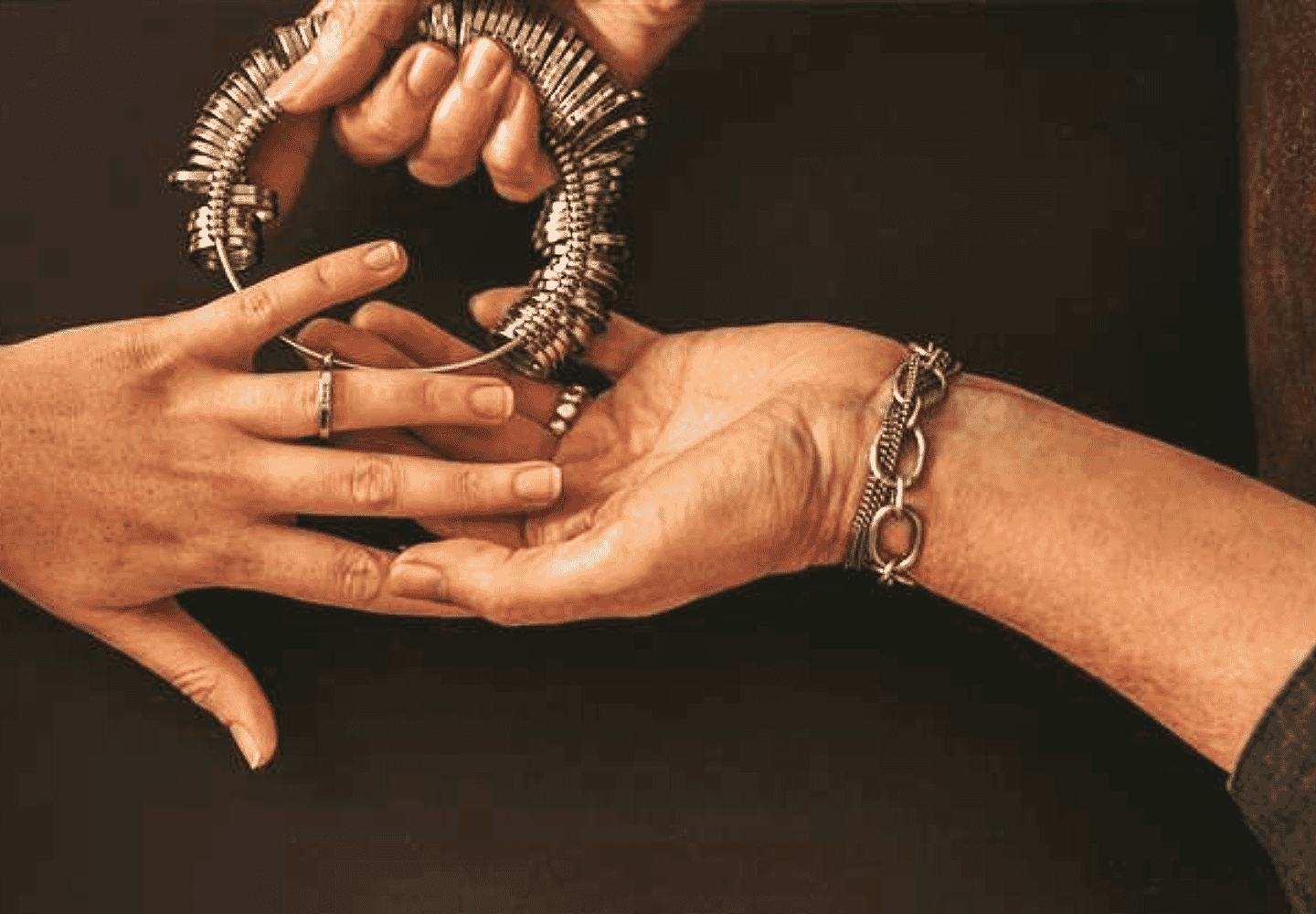
- A jeweler uses metal sizing rings that provide a precise measurement and account for comfort. This is highly recommended for engagement rings and valuable jewelry.
Tips for Measuring Ring Size Accurately
To ensure the best results, keep these tips in mind:
- Measure your finger at the end of the day
- Avoid measuring when hands are cold
- Don’t measure after intense exercise
- Measure the exact finger you’ll wear the ring on
- Take multiple measurements
- Finger size can change due to temperature, activity, and even time of day.
Ring Width and Fit Considerations
Ring width plays a significant role in how a ring feels on your finger, even if the size number is technically correct. The wider the band, the more surface area it covers, which can affect comfort and fit.
1. Thin bands: These tend to feel lighter and slightly looser on the finger. They are more forgiving and often comfortable even if the sizing is not exact.
2. Wide bands: Wider rings fit more snugly because they cover more of the finger. As a result, many people find they need to size up slightly for a comfortable fit.
- You may want to consider going up a size if you are purchasing:
- A wide wedding band
- A bold statement ring
- A comfort-fit band, which has a rounded interior that can change how the ring sits on the finger
What If You’re Between Ring Sizes?
Being between ring sizes is quite common, and choosing the right option depends on the style of the ring and your finger shape.
General guidelines include:
- For thin bands: Sizing down can provide a more secure fit.
- For wide bands: Sizing up often improves comfort.
- If your knuckle is larger than the base of your finger: Choose a size that slides over the knuckle easily without feeling too loose once in place.
When you’re unsure, it’s usually better to size up slightly. A ring that’s a bit larger is more comfortable and easier to adjust than one that feels too tight.
How to Find Someone Else’s Ring Size (Without Asking)?
Planning to surprise someone with a ring can be exciting, but figuring out the correct size without giving it away can be a challenge. Fortunately, there are a few discreet methods that can help you make an educated estimate:
- Borrow a ring they already wear: If they have a ring worn on the same finger, temporarily borrow it and have it measured by a jeweler or use a ring size guide at home.
- Ask a close friend or family member: Someone who knows them well may already be aware of their ring size or can help gather the information without raising suspicion.
- Use an average ring size: When no other option is available, average sizes can serve as a helpful starting point (US women: 6–7, men: 9–10).
- Compare finger size visually with yours: Subtly comparing their finger to one of yours that you know the size of can give you a rough idea.
Although these methods may not guarantee a perfect fit, they can significantly increase your chances of choosing a ring that’s close enough to resize if needed.
Common Ring Sizing Mistakes to Avoid
Choosing the correct ring size is essential for comfort and long-term wear. To ensure the best fit, try to avoid these common mistakes:
- Measuring too tightly: A ring that feels snug during measurement may become uncomfortable once worn for extended periods or when fingers naturally swell throughout the day.
- Using elastic or thick string: These materials can stretch or add bulk, leading to inaccurate measurements. Always use a non-stretchable, thin strip for better precision.
- Guessing based on shoe size or height: Finger size does not correlate with body measurements, so relying on guesses often results in a poor fit.
- Ignoring knuckle size: If your knuckles are larger than the base of your finger, the ring must be sized to slide over the knuckle comfortably while still fitting securely.
- Measuring only once: Finger size can change depending on temperature, time of day, or activity. Taking multiple measurements improves accuracy.
Taking a little extra time and care during the sizing process can make all the difference, ensuring a ring that feels comfortable and fits perfectly.
ShopLC’s Expert Tips for Choosing the Right Ring Size
At ShopLC, we understand that buying jewelry online should feel easy and confident. Using a reliable ring size chart, following proper measuring techniques, and seeking professional help when needed can ensure a perfect fit. Our goal is to help you choose rings you’ll love wearing every day — comfortably and confidently.
Find Your Perfect Ring Size with Confidence
Knowing how to measure ring size doesn’t have to be complicated. Whether you use a ring size chart, measure at home, or visit a jeweler, the right approach makes all the difference. Take your time, measure carefully, and consider comfort along with accuracy. When you know how to find your ring size, shopping for rings becomes a joyful experience — not a guessing game. With the right size, your ring won’t just look beautiful — it will feel perfect too.
FAQs
Q. How should a ring fit?
A. A ring should slide on easily and come off with slight resistance.
Q. Can ring size change over time?
A. Yes. Weight changes, temperature, and age can affect finger size.
Q. Is it better to size up or down?
A. When unsure, sizing up is usually more comfortable.
Q. Can rings be resized later?
A. Many can, but some styles and gemstone settings cannot.