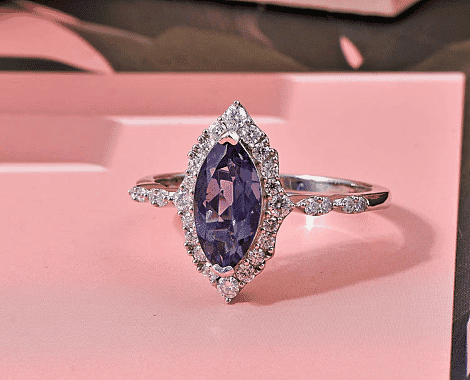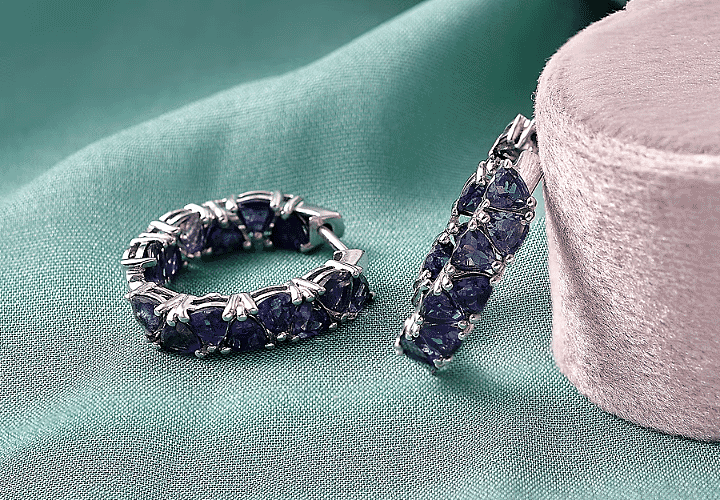
CATALINA IOLITE GEMSTONE
Iolite is the gem-quality form of the mineral cordierite. Colors of iolite range from dark sapphire blue to light blue-violet, giving it a vibrant hue. This gem's pleochroic properties give it a watery appearance and have earned it the nickname 'water sapphire.' The iolite name comes from the Greek word ios, which means violet. According to legends, iolite is a 'compass stone' used by Ancient Vikings. These mariners used iolite to identify their location on the seas. People believe that thin slices of iolite served as glare-reducers and polarizing filters, allowing navigators to locate the sun on cloudy days.
TABLE OF CONTENTS
OVERVIEW
What Does Catalina Iolite Mean?
People believe iolite brings order and balance to those who are suffering from disorganization and distraction. It calms the mind and promotes focus. Some say this gem activates creativity and lets you access thoughts and ideas that go beyond the ordinary. In meditation, it increases the vividness and detail of visions and unlocks intuitive energies.
In the ancient art of Feng Shui, placing iolite in the living room area strengthens family bonds. It eases tension or jealousy caused by sibling rivalry or the presence of a new family member.
Crystal healers use iolite to regulate digestion and enhance hair and nail growth. They say that the gem strengthens nerves and treats paralysis and numbness caused by nerve damage.
VALUE
Determining Catalina Iolite Value
We determine the value of colored stones by color, clarity, cut, and carat weight. This is no different when determining what Catalina Iolite is worth. These guidelines will help you choose iolite stones for your collection.

COLOR
Iolite is admired for its captivating violet-blue color, created by traces of iron within the stone. Much like the ocean, its appearance shifts with depth and angle, showing deep blue, soft violet, or even nearly colorless tones depending on how light passes through it. This unique pleochroic nature allows one gem to display multiple shades, including violet, blue-gray, and subtle yellow-brown hues. The most prized iolite features a rich, intense violet-blue color, closely resembling the luxurious look of tanzanite, making it especially desirable in fine jewelry.

Clarity
Gem-quality iolite is transparent to translucent. This gemstone has relatively few inclusions. Larger specimens, with tubular inclusions, can turn into cat' s-eye gems if properly cut. Also, gems with metallic, plate-like inclusions, can display a sparkly effect. Finally, stones with brown or red platelets are also famous as bloodshot iolite. When polished, iolite displays a vitreous luster.

Cut
Available with few inclusions and transparent, iolite is generally faceted. A step-cut enhances its color, and the shallow cut reduces the tone of the gemstone. Cutters take special care and technique while cutting the stone, considering its pleochroic nature and hardness. It must be cut in a particular direction to obtain the best color. The versatile gemstone is available in almost every shape like round, oval, pear, and more. Cabochons and beads are also readily available.

Carat
Iolite is found anywhere from 1 to 10 carats. Good quality gemstones above five carats are rare. The price for a specimen with excellent transparency and color tends to increase with its carat weight.
Is Catalina Iolite a Birthstone?
Catalina iolite is not a modern birthstone. However, its elegant color, similar to tanzanite, sapphire, and blue topaz, can make it a perfect and affordable alternate for the December birthstone.
Caring
Caring for Catalina iolite
- Iolite ranks 7 to 7.5 on the Mohs scale of hardness. With fair toughness, the gemstone has distinct cleavage in one direction. This makes it vulnerable to breakage when setting in a ring or other setting exposed to rough daily wear.
- Wash your iolite jewelry in a solution of mild dish soap and lukewarm water. Using a soft brush, remove dust, fingerprints, and other grime. Rinse with fresh, cold water and dry with a soft, lint-free cloth.
- Ultrasonic and steam cleaners are risky to use and can damage the gemstone.
- Store these radiant gems inside a fabric-lined box or wrapped in a soft cloth. They should be stored separately from other jewels in your collection to avoid accidental scratches or other damage.
IDEAL CHOICE
Who Can Wear Catalina Iolite?
Iolite reminds us of the beauty of an ocean. The jewel's delightful pleochroic nature makes it a classic addition to your collection and is perfect for wearing in necklaces and earrings. Also, try the gemstone in a ring or bracelets for occasional wear. Its bluish-violet to teal blue color perfectly complements a white, yellow, and pink outfit.
Difference
How Does Catalina iolite Compare to Other Blue Stones?
Iolite is a blue gem, displaying pleochroism. The gem has an appearance similar to blue sapphire or tanzanite. When compared with other similar gemstones, iolite has a particularly inky blue or violet-blue color. It's deep saturation and striking color makes it stand out. The blue hue of this beautiful gemstone falls in between brilliant sapphire and dazzling tanzanite.
Origin
Where Does Catalina iolite Come From?
Iolite deposits exist in various parts of the world. Australia, Brazil, India, Madagascar, Sri Lanka (Ceylon), Tanzania, and the United States are major sources. Shop LC sources iolite gemstones from mines in Katamanji, India. This area produces beautiful world-class iolite gems.
Formation
How is Catalina Iolite Mined?
Iolite forms during regional metamorphism of shales and other argillaceous rocks. It is available in schist and gneiss. The gem is present as an accessory mineral in granitic igneous rocks and pegmatites. When crystals of iolite grow without obstruction, they can form short prismatic crystals with a rectangular cross-section.
Most gem-quality iolite comes from placer deposits, where it occurs in association with other gems. When exposed to weathering, iolite alters to mica and chlorite. Iolite usually forms in metamorphic rocks, created from the high pressure and temperature alteration of rocks, and magnesium-rich sediments.
At a few locations, iolite is mined out of huge pits, or quarried from exposed cliffs. The miners extract the mineral using local techniques. They excavate vertical shafts with a cross-sectional area and make tunnels into the host rocks for extraction. If gem-bearing material is stuck between tougher stone, they only extract from the vein and try to leave the host rock alone.
Catalina Iolite Facts
MOHS HARDNESS
7 to 7.5
COLOR
Displays violet-blue color.
TREATMENT
Iolite has no treatment.
NATURE
Pleochroic in nature.