

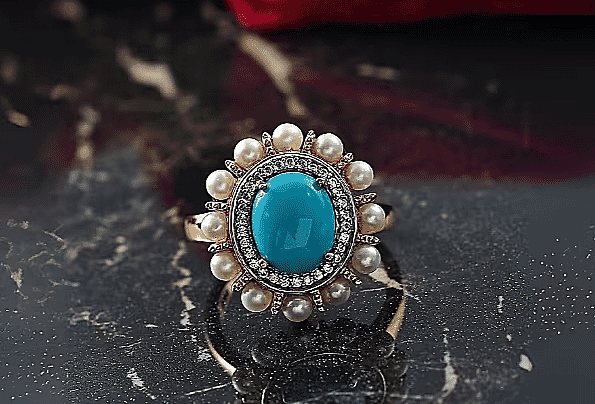
TURQUOISE GEMSTONE
Turquoise is a timeless gemstone, cherished for its striking blue to green hues and smooth, opaque texture. Revered for its spiritual significance and vibrant color, turquoise is often associated with protection and healing. Mined in various regions, this gemstone adds a touch of earthy elegance to any piece of jewelry, whether in rings, necklaces, or earrings. Turquoise is a captivating choice that brings both beauty and meaning to any design.
IMPORTANCE
Why Are Turquoise So Special?
Turquoise, with its captivating blue-green hues, has held a place of distinction in various cultures for millennia. From adorning the regalia of ancient Egyptian pharaohs to gracing the ceremonial attire of Native American leaders, turquoise has been prized not just for its beauty but also for its perceived protective and healing properties.
Turquoise is unique among gemstones due to its distinctive color, which ranges from the most commonly recognized sky blue to greenish hues, depending on the copper and iron content in the stone. This variability in color itself makes each piece of turquoise unique.
Furthermore, turquoise is among the first gemstones ever mined, with ancient turquoise mines dating back to 3200 BCE in the Sinai Peninsula. Its historical significance adds to its allure, making it a gemstone steeped in history and mystery.
VALUE
Determining Turquoise Value
Determining the value of turquoise centers primarily on its color. Factors like clarity, presence of matrix, cut, and overall craftsmanship also play crucial roles in evaluating its worth.

COLOR
The most prized turquoise color is a consistent, vibrant medium blue, often called "robin's egg blue" or "sky blue" in the trade. However, the presence of iron can shift the color towards green, providing a different but equally captivating appeal.

Clarity
Turquoise is typically opaque, which differentiates it from many other gemstones that are valued for their translucence or transparency. The presence of veining or matrix patterns, remnants of the rock in which turquoise was formed, can either enhance its value if artfully distributed or lessen it if perceived as too dominant or irregular.

Cut
Turquoise is predominantly cut as a cabochon, a choice that emphasizes the gemstone's rich color, unique texture, and any intrinsic matrix patterns through a smoothly rounded dome shape. Beyond cabochons, turquoise is also shaped into round or oblong beads, frequently used in crafting elegant strand necklaces.

Carat
Turquoise is not typically valued by carat weight alone, largely because the material is relatively abundant and not very dense. Larger pieces are not uncommon and are more valued for their craftsmanship and the beauty of the color and matrix patterns than for their size per se.
Is Turquoise a Birthstone?
Yes, turquoise is one of the birthstones for December, making it an ideal gift for those born in that month. This vibrant blue gemstone is known for its unique color and rich history, symbolizing protection, healing, and good fortune. Its stunning hues have been cherished for centuries across cultures, making it a meaningful and timeless choice for any occasion.
OVERVIEW
What Does Turquoise Mean?
Turquoise has been revered for centuries across various cultures for its metaphysical properties, believed to offer protection, healing, and good fortune. It is particularly associated with the Native American and ancient Egyptian civilizations, where it was used extensively in ceremonial and burial artifacts to provide spiritual security and eternal life.
In metaphysical belief systems, turquoise is said to enhance communication, calm the mind, and stabilize mood swings. It is also thought to foster empathy and balance, making it a favored stone among healers and those seeking emotional harmony in their lives.
Storage
Caring for Turquoise
To maintain the beauty and longevity of your Brazilian citrine, follow these care guidelines:
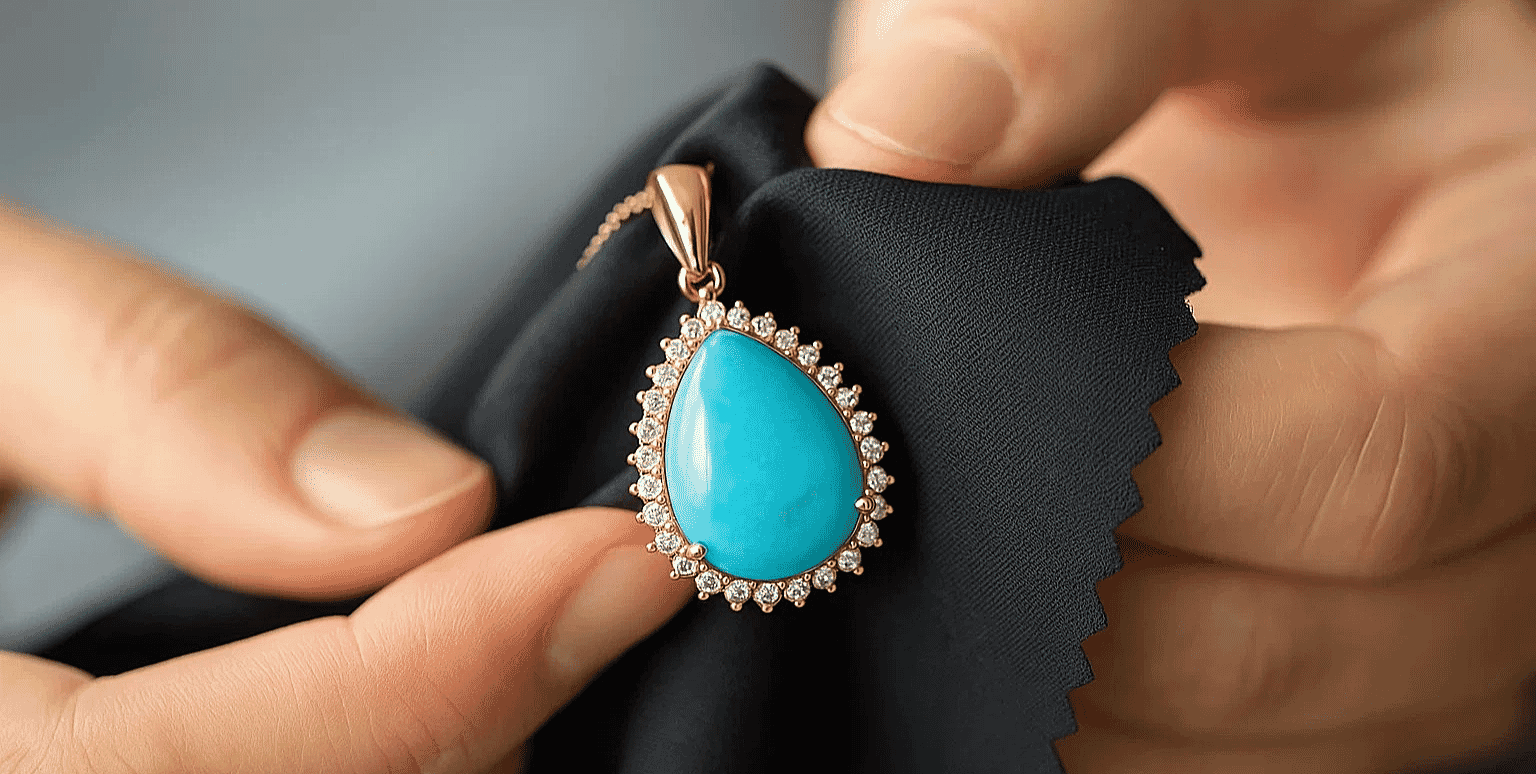
Turquoise is relatively soft compared to other gemstones (measuring about 5 to 6 on the Mohs scale), making it susceptible to scratching and chemical damage. It should be stored separately from harder gemstones and kept away from household chemicals. Cleaning should be done using only warm, soapy water and a soft brush. Harsh jewelry cleaners and ultrasonic cleaning systems must be avoided to prevent damage to the stone.
IDEAL CHOICE
Who Can Wear Turquoise?
Turquoise is considered a gemstone with broad appeal, suitable for both men and women. It is often used in jewelry that features a Southwestern or bohemian style, though it is versatile enough for more formal settings. In metaphysical beliefs, turquoise is thought to offer protection, making it a popular choice for those seeking a talisman or amulet.
Difference
How Does Turquoise Compare to Other Gems?
Turquoise and howlite are often compared for their visual similarities, especially when howlite is dyed to mimic the distinctive blue-green hue of turquoise. Naturally white with fine veining, howlite is easily dyed, making it a cost-effective substitute for more expensive turquoise in jewelry.
While both stones are visually similar, they differ significantly in composition and properties. Turquoise, a valued phosphate mineral, is known for its protective and healing properties and is durable enough for various jewelry applications. Howlite, a softer borate mineral, is less durable and typically used in less demanding jewelry settings.
TREATMENT
Turquoise Treatment
- Zachery Treatment: This is a process where turquoise is infused with resin to enhance its color and durability, making it more resistant to damage and wear.
- Impregnation: Often used for turquoise, impregnation involves filling the stone's pores with substances like resin or oil to improve its appearance and structural integrity.
- Wax: Applying wax to turquoise is a common treatment to enhance the stone's luster and color, providing a subtle sheen and richer visual depth.
- Oil: Oiling turquoise can help darken and even out the coloration of the stone, but this treatment may need to be periodically refreshed as the oil can dry out or be absorbed over time.
- Dyes: Dyes are sometimes applied to turquoise to intensify or alter its color; however, this can affect the stone's value and should be disclosed to potential buyers.
- Resin: injecting resin into turquoise stabilizes the structure and enhances both color and shine, resulting in a more attractive and durable gemstone.
TYPES
Variety of Turquoise
-
Sleeping Beauty Turquoise
Known for its solid, light blue color with minimal veining, Sleeping Beauty turquoise from Arizona is highly sought after for its purity and vibrant hue.
-
Royston Turquoise
This type, mined in Nevada, showcases a range of blue and green colors beautifully intermixed with a distinctive, brown matrix that adds character.
-
Sierra Nevada Turquoise
Mined in Nevada, Sierra Nevada turquoise is admired for its deep green to blue hues, often accompanied by a golden or brown matrix.
-
Blue Moon Turquoise
Originating from Nevada, blue moon turquoise is valued for its uniquely smooth, rich blue color with a contrasting light to dark webbed matrix.
-
Sonoran Gold Turquoise
This turquoise, from Mexico, is notable for its dramatic gold matrix running through vibrant green and blue stones, creating a striking visual contrast.
-
Blue Ridge Turquoise
Found in Nevada, Blue Ridge turquoise is known for its deep, rich blues and often complex webbing, making it a favorite among collectors.
-
South Hill Turquoise
Extracted in Nevada, South Hill turquoise is recognized for its traditional blue hues interspersed with a delicate golden-brown matrix.
-
Persian Turquoise
Prized for centuries, Persian turquoise from Iran is celebrated for its intense, uniform sky blue color, often without any matrix, epitomizing classic turquoise beauty.
Turquoise Facts
MOHS HARDNESS
5-6
COLOR
Blue to Greenish Blue.
TREATMENT
May undergo additional treatment to improve its brilliance.
ORIGINS
May undergo additional treatment to improve color and clarity.
FAQs
Q. What determines the value of turquoise?
A. Value is mostly based on color, with even, intense blues being most prized, along with clarity, matrix presence, and rarity.
Q. How can you tell if turquoise is real or fake?
A. Real turquoise feels cool and waxy, while fakes may feel warm and lack natural color variations; a hot needle test can detect plastic imitations.
Q. Is turquoise always blue?
A. Turquoise ranges from shades of blue to green, influenced by copper for blue hues and iron or chrome for green shades.
Q. How should turquoise jewelry be cared for?
A. Protect turquoise from scratches and chemicals, clean with a soft cloth, and store separately from harder gemstones.
Q. Is turquoise a birthstone?
A. Yes, turquoise is a December birthstone, symbolizing good fortune and peace for those born in that month.

Free Shipping
Free shipping on orders above $50

30 Days Free Return
Shop stress-free

100% Secure Payment
Shop with confidence

Customer Support 24/7
Help whenever you need it


 View Cart