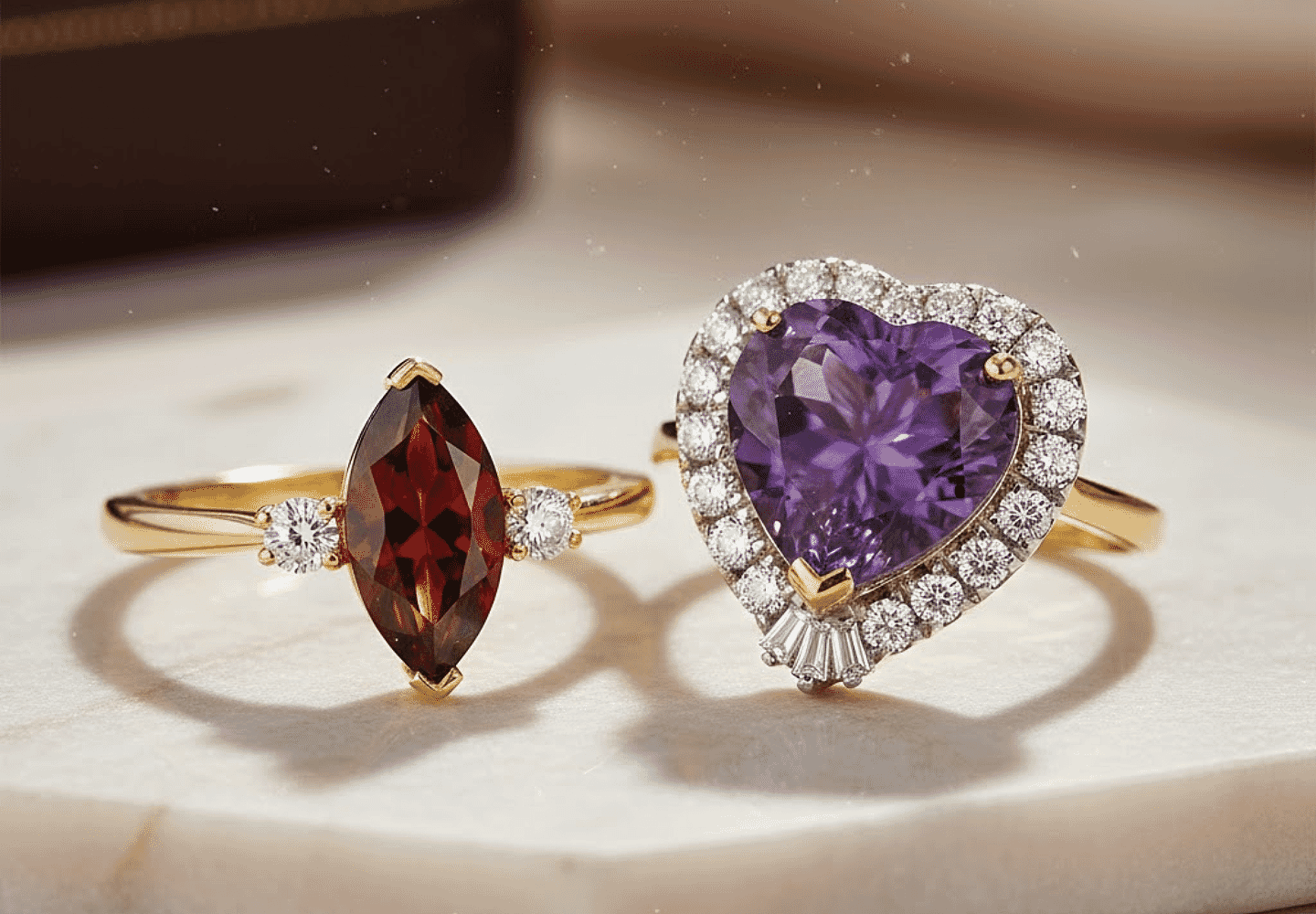
GARNET VS. RUBY: A COMPLETE JEWELRY GUIDE
When choosing a red gemstone, Garnet and Ruby are often compared for their rich color, beauty, and symbolism. While they may appear similar at first glance, these gemstones differ significantly in value, durability, rarity, price, and everyday wearability. Understanding the difference between Garnet vs Ruby can help you make the right buying decision—whether for fine jewelry, gifting, or investment.
OVERVIEW
Garnet Vs. Ruby: What’s Special?
Garnet and ruby are both red gemstones, but they differ in origin, value, and characteristics, which makes each one special. Garnet is a naturally occurring group of minerals known for its deep red tones, wide color range, and affordability, making it a popular choice for everyday jewelry. Ruby, a precious gemstone from the corundum family, is prized for its vivid red color, rarity, and exceptional hardness. While garnet symbolizes passion and protection, ruby represents love, power, and prosperity. Understanding garnet vs. ruby helps buyers choose between budget-friendly beauty and timeless luxury. Both Garnet and Ruby belong to the red gemstone family, yet their appeal lies in different strengths.
What Makes Garnet Special?
- Known for deep red to wine hues
- Available in several varieties like Almandine, Pyrope, and Rhodolite
- Affordable and widely available
- Affordable and widely available
- Popular for daily-wear jewelry
What Makes Ruby Special?
- One of the four precious gemstones
- Famous for its vivid “pigeon blood” red color
- Represents passion, power, and royalty
- Extremely rare and valuable
- Preferred for luxury and heirloom jewelry
VALUE
Determining Garnet Vs. Ruby Value

COLOR
Color is the most important factor when determining the value of garnet vs. ruby. Garnets appear in a wide spectrum of colors, but deep red varieties like almandine and pyrope are the most common and affordable. Rubies are valued almost entirely on the intensity and purity of their red hue, with vivid “pigeon blood” red being the rarest and most expensive. The richer and more saturated the red, the higher the ruby’s value compared to garnet.

CLARITY
Clarity refers to the presence of internal inclusions or surface blemishes within the gemstone. Garnets typically have good clarity, and inclusions rarely affect their price significantly due to their abundance. Rubies, however, often contain natural inclusions, and completely clean stones are extremely rare and highly valuable. Fewer visible inclusions can dramatically increase a ruby’s worth.

CUT
The cut of a gemstone affects how well it reflects light and displays brilliance. Garnets are relatively easy to cut due to their crystal structure, allowing for a wide range of shapes and styles at lower costs. Rubies require expert cutting to enhance their color and brilliance, as poor cutting can reduce their value substantially. Precision-cut rubies command much higher prices than commercial cuts.

CARAT
Carat weight plays a major role in gemstone pricing, especially when comparing garnet vs. ruby. Garnets are widely available in larger sizes at affordable prices, making them ideal for bold jewelry designs. Rubies increase exponentially in value with size, particularly stones over one carat with fine color and clarity. Large, high-quality rubies are rare and can be significantly more valuable than garnets of the same size.
Selection
How to Choose Between Garnet Vs. Ruby?
- Consider Your Budget
Garnet is a budget-friendly gemstone that offers rich color and beauty at an accessible price, while ruby is a premium gemstone known for its high market value and long-term investment appeal. - Evaluate Color Preference
Choose garnet if you prefer deep red or slightly earthy tones, and opt for ruby if you want a vivid, intense red that stands out with luxury and brilliance. - Check Durability for Daily Wear
Ruby ranks 9 on the Mohs scale, making it ideal for engagement rings and everyday jewelry, whereas garnet is better suited for occasional wear due to its lower hardness. - Purpose of Jewelry
Garnet is perfect for fashion jewelry, gifting, and statement pieces, while ruby is best for heirloom jewelry, anniversaries, and special milestone celebrations. - Symbolism & Meaning
Garnet symbolizes passion, protection, and energy, making it meaningful for personal wear, while ruby represents love, power, and prosperity, often chosen for romantic or luxury jewelry.
Difference
Difference Between Garnet Vs. Ruby
| Key Points | Garnet | Ruby |
|---|---|---|
| Gem Type | Semi-precious gemstone | Precious gemstone |
| Color | Dark red, wine, purplish red | Bright red to pigeon-blood red |
| Hardness | 6.5–7.5 on Mohs scale | 9 on Mohs scale |
| Rarity | Common and widely available | Rare and highly valued |
| Price | Affordable and budget-friendly | Expensive and premium |
| June | Pearl | Pearl, Alexandrite, Moonstone |
| Best For | Daily wear and gifting | Luxury jewelry and investment |
Caring
Caring for Garnet Vs. Ruby
Garnet Care
- Mohs hardness: 6.5–7.5
- Suitable for rings, pendants, and earrings
- Avoid rough wear and ultrasonic cleaners
Ruby Care
- Mohs hardness: 9
- Extremely durable and scratch-resistant Extremely durable and scratch-resistant
- Ideal for engagement rings and everyday luxury jewelry
FAQs
Q. Is garnet cheaper than ruby?
A. Yes, garnet is significantly more affordable than ruby. While rubies are considered precious gemstones with high demand and rarity—especially high-quality red or “pigeon blood” rubies—garnets are semi-precious and widely available, making them budget-friendly options for jewelry.
Q. Can garnet be worn daily like ruby?
A. Garnet can be worn daily, but it is slightly less durable than ruby. With a Mohs hardness of 6.5–7.5, garnets may scratch or chip more easily compared to rubies, which have a hardness of 9. For rings or bracelets that see heavy wear, ruby is a safer long-term choice.
Q. Does garnet look like ruby?
A. Some garnets, particularly the red almandine variety, can resemble rubies at first glance. However, rubies tend to have a brighter, more vivid red with a subtle pink or bluish undertone, while garnets usually show darker or wine-red hues.
Q. Which gemstone holds value better over time?
A. Rubies hold their value far better than garnets. High-quality rubies are rare and highly sought after, making them excellent for investment and heirloom jewelry. Garnets, being more common, generally do not appreciate significantly in value.
Q. Are garnets real gemstones?
A. Yes, garnets are natural gemstones formed in the Earth’s crust. They are not synthetic or imitation stones, and they come in a variety of colors beyond red, including green, orange, and purple.
Q. What are the color differences between garnet and ruby?
A. Garnets are typically dark red, brownish-red, or wine-colored, whereas rubies have a bright, vibrant red that can range to a deep “pigeon blood” red. This distinction in color intensity and tone makes rubies more visually striking in jewelry.
Q. How durable is garnet compared to ruby?
A. Garnet is moderately hard but less durable than ruby. Its Mohs hardness ranges between 6.5 and 7.5, meaning it can be scratched by harder materials. Ruby, with a hardness of 9, is extremely resistant to scratches and suitable for everyday wear, including rings and bracelets.
Q. Can garnets be used in engagement rings?
A. Yes, garnets can be used in engagement rings, especially for those seeking unique or affordable alternatives. However, due to their lower hardness compared to ruby, extra care is needed to prevent scratches and damage in daily wear.
Q. Do garnets have the same brilliance as rubies?
A. Garnets are beautiful but generally less brilliant than rubies. Rubies have higher clarity and refractive properties, giving them a sparkle that makes them highly desirable in fine jewelry. Garnets may appear darker and less fiery in comparison.
Q. Are there different types of garnets and rubies?
A. Yes. Garnet is a group of minerals, including almandine, pyrope, spessartine, and more, each with distinct colors and properties. Rubies are a variety of corundum, primarily red, but subtle variations in tone and saturation can affect their value and appearance.