
TANZANITE GEMSTONE
Tanzanite, a beautiful bluish-violet zoisite gemstone, is among the rarest gems on Earth and was discovered by chance. Its color transitions from blue to violet when viewed from different angles due to its strong pleochroism. Found exclusively in a small region of Tanzania, this gemstone is highly prized for its uniqueness and limited supply. Learn about tanzanite’s properties, origin, value, and what makes it a sought-after choice in fine jewelry.
TABLE OF CONTENTS
OVERVIEW
What is Tanzanite?
Tanzanite is a bluish-violet gemstone found exclusively in Tanzania's Merelani Foothills. Initially mistaken for a new deposit of sapphire by a Maasai Tribesman in the late 1960s, these crystals were soon identified as a novel zoisite variant. It is named in tribute to its Tanzanian roots, and it surpasses diamonds in scarcity by a thousandfold, which is one reason it is known as the “Gemstone of a Generation” or the “Gemstone of the 20th Century”.
VALUE
How valuable is Tanzanite?
Like other colored stones, the value of tanzanite hinges on four crucial factors: color, clarity, cut, and carat weight. The following guidelines will help in choosing tanzanite stones for your collection.

Color
The finest tanzanite color is found in ‘AAAA’ grade stones, featured in the Rhapsody and Iliana collections. ‘AAA’ tanzanite offers excellent value and is the most accessible choice for owning a high-quality gemstone. Most tanzanite jewelry at Shop LC is ‘AA’ grade, making it very affordable and ideal for casual gem collectors. ‘A’ grade tanzanite, the most common on the market, is typically used as accent stones in jewelry.

Clarity
Premium tanzanite is typically eye-clean, with inclusions visible only under 10× magnification. Inclusions seen by the naked eye can lower a stone’s value, especially in lighter colors. While inclusions are natural, skilled cutting minimizes them so they are usually only visible with magnification.

Cut
Cutting tanzanite requires balancing weight retention with enhancing color and clarity, while also accounting for its pleochroic nature. Because of this structure, emphasizing violet tones usually results in larger stones. Violet-blue tanzanite is common, while predominantly blue stones are the rarest.

Carat
Tanzanite is available in many sizes, offering options for every preference. Larger stones tend to show richer color, with the finest blue-violet tanzanite and pleochroic flashes of red typically found in gems over five carats. Still, attractive tanzanite can be found in all sizes to suit different tastes and budgets.
Tanzanite in Jewelry Design

Tanzanite Flower Jewelry Set in Platinum Plated Sterling Silver
This tanzanite ring and pendant set mimics the graceful contours of a blooming flower. The petals are formed by marquise-cut tanzanite, renowned for its deep blue-violet hues, arranged to capture the light beautifully. This exquisite silver jewelry adds a touch of floral elegance to any ensemble.

Certified & Appraised Iliana 18K White Gold AAA Tanzanite Ring
Enhance your style with this Iliana AAA tanzanite and diamond ring in 18K white gold. This luxury gemstone ring for women features a radiant tanzanite accented by dazzling diamonds. Perfect for adding sophistication and sparkle to any occasion.

Rhapsody AAAA Tanzanite and E-F VS Diamond 2.29 ctw Halo Pendant Necklace in 950 Platinum
Elevate your style with the Rhapsody tanzanite pendant necklace in 950 platinum. The AAAA-grade violet-blue gemstone offers remarkable depth and radiating elegance. This platinum necklace symbolizes achievement and understated luxury, making it a perfect addition to your collection.
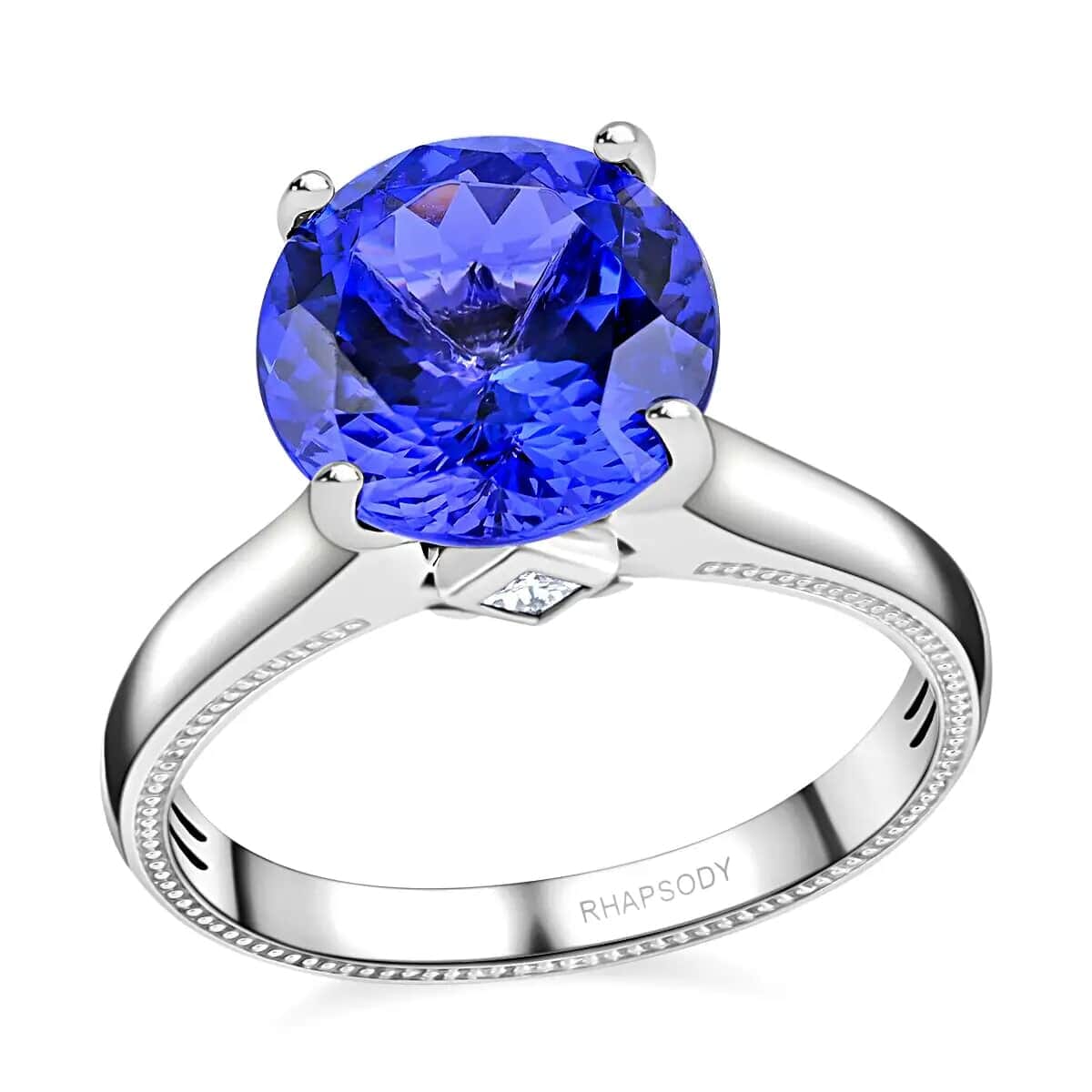
Ankur Treasure Chest Rhapsody Certified AAAA Tanzanite Ring
Experience the prestigious allure of the certified Rhapsody AAAA tanzanite and diamond ring. Cradled in prongs setting, the beautiful AAAA tanzanite takes center stage, complemented by E-F VS grade diamonds. Its composition emits an elegant, dignified aura, making it a perfect piece to complete the grace of the wearer.
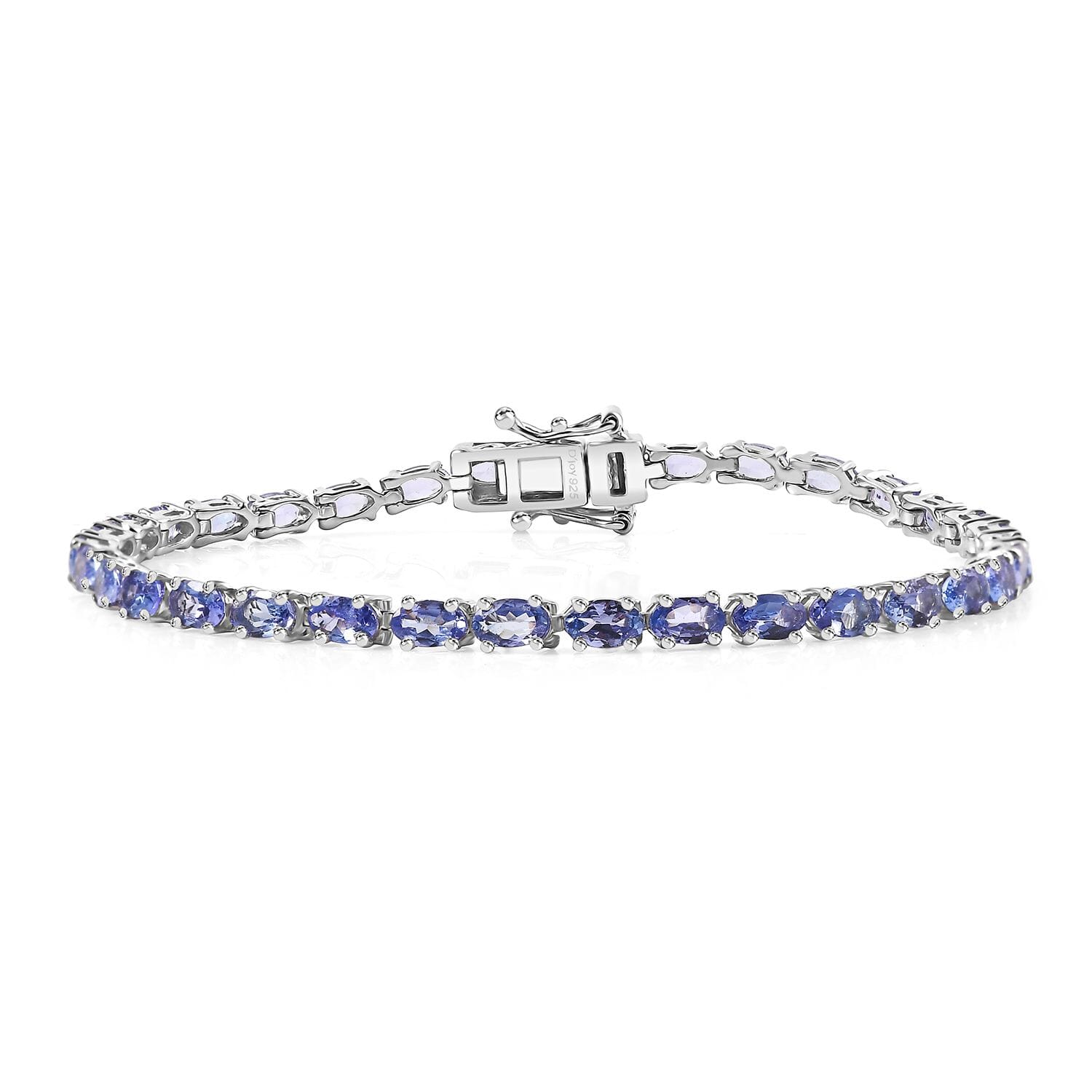
D'Joy Tanzanite 6.15 ctw Tennis Bracelet in Rhodium Over Sterling Silver
Elevate your collection with this D’Joy tennis bracelet in 925 sterling silver. This elegant gemstone bracelet for women showcases a continuous row of sparkling stones, offering subtle shimmer. Perfect for daily wear or special occasions, it adds timeless sophistication to any outfit.

Certified & Appraised Rhapsody 950 Platinum AAAA Tanzanite and E-F VS Diamond Halo Earrings
Elevate your look with these Rhapsody tanzanite and diamond earrings in 950 platinum. These elegant halo earrings for women shimmer with vibrant gemstones and timeless sophistication. Perfect for formal events or gifting, they add a refined, luxurious touch to any outfit.
TYPES
Tanzanite Varieties
While most of us are familiar with the traditional blue-violet variety of tanzanite, there are actually several zoisite gems that are also considered tanzanite:
- Bondi Blue Tanzanite: Named after the sea-blue color seen on the beautiful Bondi Beach in Australia, Bondi Blue Tanzanite displays deep blues tinged with rich greens.
- Natural Green Tanzanite: Similar in color to green tourmaline, Natural Green Tanzanite has a green base color with red-violet and blue undertones.
- Peacock Tanzanite: Peacock Tanzanite represents features transition between cheerful green and bright blue hues, mimicking the shimmer of the male Indian peafowl.
The Versatility of Tanzanite
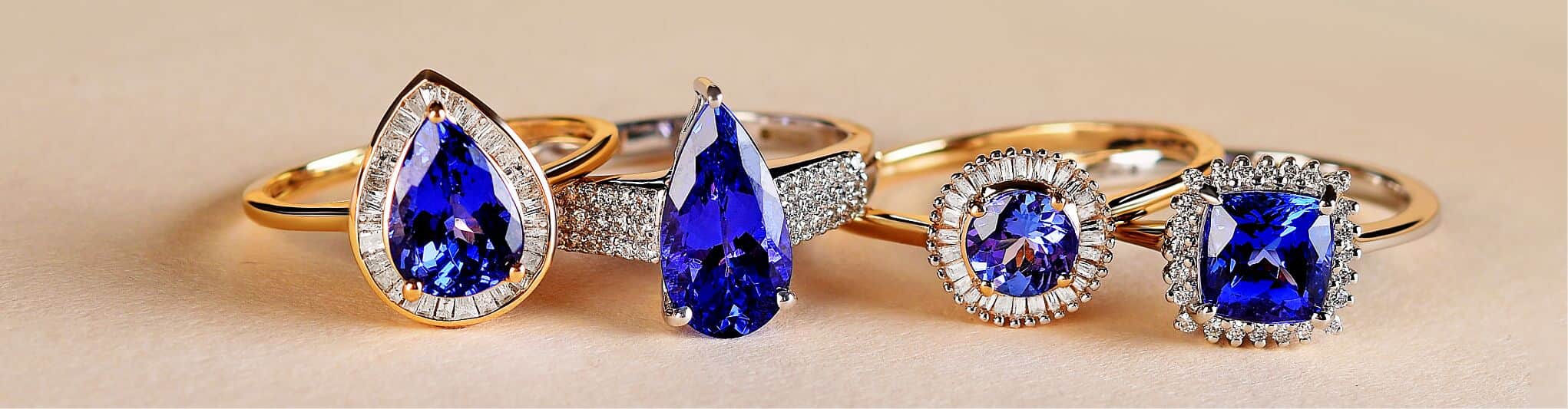
Tanzanite’s versatility in jewelry design lies in its compatibility with a wide range of metals and settings. Its blue-violet hue complements both cool and warm tones, making it ideal for custom designs in platinum, white, yellow, or rose gold. The gemstone can also be cut into various shapes and sizes—from classic round and oval to marquise, pear, and emerald—allowing designers to create pieces tailored to individual preferences while showcasing tanzanite’s adaptability and appeal.
ORIGIN
Where Does Tanzanite Come From?
Tanzanite's journey begins in Tanzania, named to avoid the less appealing moniker “blue zoisite,” which bore an unfortunate resemblance to “blue suicide.” This decision paved the way for its recognition as tanzanite in honor of the country in which it was discovered.
While specific discovery tales are varied, tanzanite was unearthed in the 1960s. Many narratives acknowledge the Maasai of the Merelani Foothills, near Mt. Kilimanjaro, as early witnesses to the gem's allure.
The Tanzanian government recognizes Jumanne Ngoma as the man who discovered tanzanite. In the mid-1980s, Ngoma would receive two certificates legitimizing his discovery of the gem. In April 2018, the Tanzanian government bestowed a large reward to Ngoma to help care for him in his retirement. The Tanzanian government considers Jumanne Nogma to be a national treasure for his discovery of the stone.
However, another story credits Manuel de Souza, who discovered the stone by accident. De Souza was attempting to prospect further inland for gems, but poor road conditions meant his driver wouldn’t take him the full distance he intended to travel. Instead, de Souza began to explore around the village of Mtakuja, where the driver had left him and his crew. Souza was said to have found the first tanzanite crystals there. This story has gained strong support and momentum because of the mountains of evidence supporting it. Not only was de Souza’s discovery covered in major periodicals of the time, but many prominent figures within the gem trade have backed his claims in countless anecdotes, articles, and reports.
IDEAL CHOICE
Who Can Wear Tanzanite?
Blue is a surprising color, its shades shaping our perceptions in remarkable ways. Tanzanite sits in a unique space among gems. Originally, sellers were excited by blue tanzanite, as they thought it would give them a good substitute for sapphire. But, over time, the subtle range of violet-blue has become better known, making tanzanite a desirable gem in its own right.
Blue is one of the most popular colors in the U.S. The mysterious blues and enchanting violets of tanzanite create a mystique that easily intrigues us all. Fortunately, tanzanite crystal covers all of these bases and then some!
The exquisite and deeply saturated colors that have propelled this stone to world renown are perfect for classic and formal attire. A certified and appraised AAA tanzanite ring with an expertly set gem is the ultimate expression of luxury.
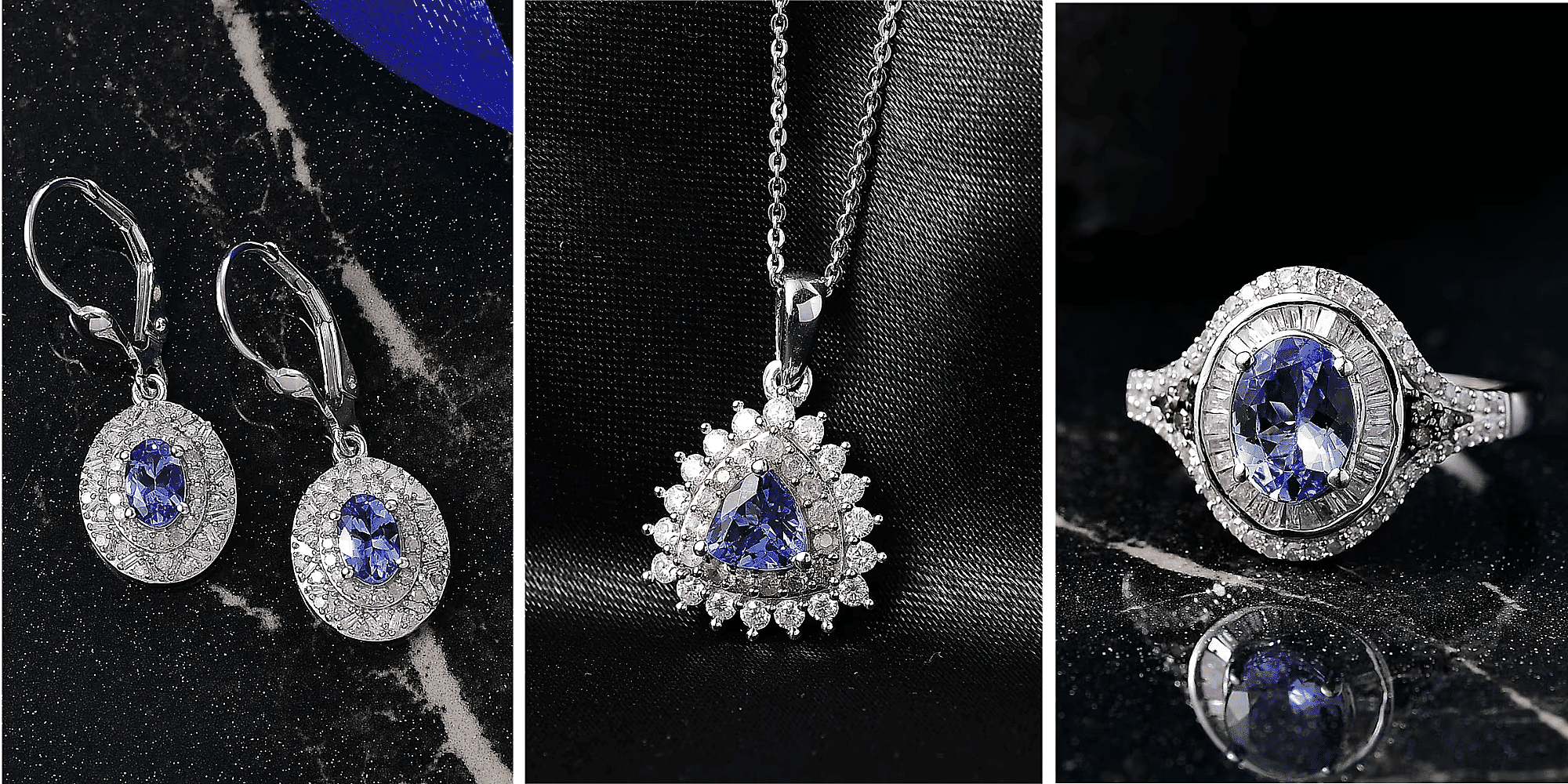
While tanzanite is rare and unique, its accessibility is part of its charm. You can find premium tanzanite available in affordable options that include settings of precious sterling silver, often enhanced with a platinum or gold finish.
These selections are great for their contemporary appeal and are a versatile addition to any collection. Tanzanite fashion jewelry is great for both office and casual attire. Use it to effortlessly transition from day to night.
FORMATION
How Is Tanzanite Mined?
Following tanzanite's discovery, the rush of miners and treasure seekers in the tanzanite mines led the government to organize the area into four blocks, labeled ‘A’ to ‘D,’ a system that remains today. Shop LC sources its tanzanite from Block C, partnering with TanzaniteOne Ltd, the largest producer of tanzanite.
As a top Sight Holder, Shop LC's substantial purchases enable a steady supply at low costs for consumers and the assurance of an ethical supply chain, giving peace of mind to rare gem collectors. The collaboration also supports the Tanzanite Foundation, which aids the Tanzanian community through educational and infrastructural services.
Block C is the largest of the Blocks physically and also produces the highest yield. Mining for tanzanite continues to rely on hand tools and traditional techniques, but Block C also benefits from modern technology, enabling more efficient, safer, and reliable extraction of tanzanite gemstones.
Block C, the largest and most productive, combines traditional mining techniques with modern technology for better efficiency and safety. Mines reach depths of over 2600 feet, with geological surveys suggesting even deeper reserves. However, deeper mining poses safety challenges and may impact future operations.
Is Tanzanite a Birthstone?
Tanzanite is one of three modern December birthstones. A relatively recent addition, tanzanite joined the modern birthstone list in 2002. It was the first major change to the modern birthstone list since 1952. Compared to blue topaz, zircon, and turquoise, a tanzanite birthstone is a perfect gift for someone who prefers a moodier, more mysterious birthstone. Tanzanite is also the traditional gift for the 24th wedding anniversary.
COMPARISON
How Does Tanzanite Compare to Other Stones?
| Feature | Tanzanite | Iolite | Sapphire |
|---|---|---|---|
| Gemstone Type | Zoisite variety | Cordierite variety | Corundum variety |
| Primary Color | Blue to violet | Blue-violet to grayish blue | Blue (also available in many colors) |
| Color Change / Pleochroism | Strong pleochroism (blue, violet, burgundy) | Very strong pleochroism (blue, violet, gray) | Minimal pleochroism |
| Hardness (Mohs) | 6–6.5 | 7–7.5 | 9 |
| Durability | Moderate | Good | Excellent |
| Brilliance | High | Moderate | Very high |
| Rarity | Very rare (single source: Tanzania) | Moderately rare | Widely available |
| Origin | Tanzania (only) | India, Sri Lanka, Madagascar | Sri Lanka, Myanmar, Madagascar, Australia |
| Price Range | Premium | Affordable | Premium to very high |
| Best Jewelry Use | Earrings, pendants, occasional rings | Rings, earrings, pendants | All jewelry types, daily wear |
| Care Requirement | Gentle care recommended | Moderate care | Low maintenance |
| Symbolism | Transformation, intuition | Vision, clarity | Wisdom, loyalty |
| Birthstone | December (modern) | Not a birthstone | September |
Properties of Tanzanite
Tanzanite carries a wealth of meaning and significance beyond its aesthetic appeal. Its properties range from metaphysical attributes believed to enhance communication and healing, to its esteemed place as a modern December birthstone.
What Does Tanzanite Mean?
Though tanzanite is a recent discovery in the global market, knowledge of the mineral zoisite is traceable to the early 19th century. Gem therapists associate zoisite with improving fertility in men and women by stimulating desire and healing reproductive organs. They also believe that zoisite provides additional protection during pregnancy for unborn children.
Specifically, tanzanite is said to boost the immune system, protecting people from disease by stimulating healing. Like many other blue-color stones, crystal healers are thought to improve communication and sharpen the mind, opening the ability to perceive the greater world around us.*
*For informational purposes only. These remedies, approaches, and techniques are NOT a substitute for professional medical care or treatment. They should not be used to treat any ailment without prior consultation with a qualified healthcare professional.
Authenticity
How to Authenticate Tanzanite?
Tanzanite's unique allure and rarity make it a coveted gemstone, but ensuring its authenticity is crucial when purchasing or evaluating Tanzanite jewelry. Here's a step-by-step guide to help you authenticate tanzanite:
1. Research and Verification: Begin by researching reputable sources and dealers known for their expertise in tanzanite. Verify the credentials and certifications of the seller to ensure they adhere to industry standards and ethical practices. Stick to retailers known for their commitment to authenticity and transparency in the gemstone trade, such as Shop LC.
2. Color Assessment: Examine the color of the tanzanite carefully. An authentic tanzanite stone typically displays a vivid blue-to-violet hue with flashes of red. Be wary of gems with overly uniform or unnatural colors, as they may indicate treatments or synthetic origins.
3. Clarity Inspection: Assess the clarity of the tanzanite by examining it under magnification. Look for any internal inclusions or blemishes that may affect its transparency and value. Authentic tanzanite often contains natural inclusions, but excessive flaws or irregularities could indicate synthetic or treated stones.
4. Cut Evaluation: Evaluate the cut of the stone to ensure it exhibits optimal brilliance and symmetry. Authentic tanzanite typically has a faceted stone to enhance its color and clarity while maximizing light reflection. Pay attention to the precision of the cut and the quality of the facets, as they can significantly impact the stone's overall appearance.
5. Certification and Documentation: Request a certificate of authenticity or gemological report from a reputable gemological laboratory. These documents provide detailed information about the stone’s characteristics, including its color, clarity, cut, and carat weight. Verify that the certificate matches the stone in question and confirms its natural origin and authenticity.
6. UV Testing: Perform a UV (ultraviolet) light test to further authenticate your gem. Authentic tanzanite typically exhibits a distinctive naturally blue fluorescence under UV light, known as tenebrescence. However, note that the absence of fluorescence does not necessarily indicate synthetic or treated tanzanite, as not all genuine stones fluoresce.
7. Consultation with Experts: When in doubt, seek guidance from experienced gemologists or jewelry appraisers who specialize in tanzanite. They can provide professional insights and expertise to help authenticate the stone and ensure that it is not an imitation.
CARE
Caring for Tanzanite
Tanzanite is rated 6.0 to 7.0 on the Mohs hardness scale, meaning that it is relatively durable. However, it can cleave if struck. For an active person wearing tanzanite daily, a pendant or earrings may be a better choice than a ring. Proper care ensures that your tanzanite crystal remains as captivating as the day you received it. Here are more essential tips you should consider:
Cleaning: To clean tanzanite safely, use a mild detergent solution diluted in warm water. Gently scrub the gemstone with a soft-bristled brush, such as a toothbrush, to remove any dirt or residue. Avoid harsh chemicals or abrasive cleaners, as they can damage the gemstone's surface and affect its clarity and color. After cleaning, rinse the tanzanite thoroughly under running water and pat it dry with a soft, lint-free cloth.
Storage: Store each piece separately in a soft pouch or lined jewelry box to prevent scratches and abrasions. Avoid storing tanzanite with other gemstones or metal jewelry that may scratch its surface. Keep tanzanite away from direct sunlight and extreme temperatures, as prolonged exposure can cause fading and thermal shock, which can cause the stone to fracture.
Preventive Care Measures: Remove your tanzanite pieces before engaging in activities that may subject them to impact or abrasion, such as sports or household chores. Avoid exposing tanzanite jewelry to harsh chemicals, including household cleaners, hairspray, and perfume, as they can corrode the metal settings and affect the gemstone's appearance. Schedule regular inspections with a professional jeweler to check for loose settings or signs of damage and ensure timely repairs if needed.
Facts
Facts of Tanzanite
Tanzanite ranks from 6.0 to 7.0 on the Mohs hardness scale.
The best tanzanite displays a transition of color from blue to violet, with flashes of red.
Tanzanite originates in Tanzania, first found in the Merelani Hills near Mount Kilimanjaro.
Tanzanite universally undergoes heating to improve its color.
Tanzanite is the blue-to-violet variety of the zoisite mineral structure. Sometimes, it’s known in green or pink varieties, but these specimens are rare.
FAQs
Q. Can tanzanite be worn in everyday jewelry, or is it better suited for special occasions?
A. Tanzanite can be worn in everyday jewelry, but it's essential to handle it with care to avoid damage. Many people choose to wear tanzanite for both casual and formal occasions due to its versatility.
Q. Can tanzanite change color over time or with exposure to light?
A. Tanzanite can exhibit pleochroism, meaning it may display different colors when viewed from different angles. However, it does not typically change color over time or with exposure to light.
Q. Can tanzanite be passed down as an heirloom?
A. Yes, tanzanite can be passed down as an heirloom. Its durability and timeless beauty make it a meaningful and cherished piece of jewelry that can be enjoyed for generations to come.
Q. Can tanzanite be found in jewelry pieces other than rings and earrings?
A. Yes, tanzanite can be incorporated into various types of jewelry, including necklaces, bracelets, brooches, and even men's accessories like cufflinks. Its versatility allows for creative and unique jewelry designs.
Q. What distinguishes an emerald-cut tanzanite from other cuts?
A. An emerald-cut tanzanite features rectangular facets and trimmed corners, accentuating the gemstone's clarity and color. This cut offers a sleek and elegant appearance, showcasing the gem’s vibrant violet hues.
Q. Are tanzanite and ruby crystals similar?
A. While tanzanite and ruby are both prized gemstones, they belong to different mineral families and exhibit distinct characteristics. Tanzanite, a variety of zoisite, boasts vibrant violet hues, while ruby, a variety of corundum, displays intense red tones.
Q. What should I look for when buying tanzanite online?
A. Buy from reputable sellers with a track record of selling genuine gemstones. Look for detailed descriptions, high-quality images, and certificates of authenticity to ensure you're getting genuine tanzanite.